The roadblocks of long-term addiction recovery
Long-term addiction recovery and continuing substance use treatment or alcohol treatment can be time-consuming with years spent on the road to and from doctors offices, lengthy waiting room times, and hours spent navigating treatment facilities that fit into your everyday schedule. With long-term recovery, it’s possible that you may face fatigue or setbacks that need to be managed (“About Recovery,” 2024) when trying to overcome these inconveniences on a regular basis for a prolonged period of time.
As addiction recovery continues, you may feel that the time-consuming nature of appointments and therapy are interfering with your other priorities and the life that you have worked so hard to rebuild. Time spent going to treatment can mean time away from work, away from home, away from loved ones, and an increased need for things like childcare.
When roadblocks = resistance
When faced with these roadblocks, you may start to miss treatment appointments and increasingly feel that your most viable solution is to pause recovery or, more severely, stop treatment entirely. Continuing treatment and maintaining recovery allows you to continue to improve your health, nurtures your autonomy and helps you to reach your utmost potential (“Recovery,” n.d.). Rather than missing appointments or stopping care, it is crucial to explore options that offer flexibility and allow you to successfully manage the hurdles that long-term recovery presents.
Removing barriers with online addiction treatment
One way to continue treatment, cut out commuting, get precious time back, and make room for all of life’s priorities is to explore virtual alcohol treatment and drug addiction treatment.
Online addiction treatment does your recovery in a way that fits the schedule and circumstances of your life. Continuing care becomes just a click away, making long-term recovery more attainable, manageable and stress-free.
How virtual addiction treatment supports long-term recovery
Less time spent getting treatment should not mean less support. According to the Substance Abuse and Mental Health Services Administration (SAMHSA), there are four major dimensions of recovery. Virtual treatment works well to support each of these dimensions so that long-term recovery stays positive, productive and prepares you for continued successes:
The Four Major Dimensions of Recovery*
Health – having care for mental, physical and emotional well-being as well as the knowledge to make healthy choices are critical to long-term recovery. Virtual addiction treatment services such as same-day support, Medication-Assisted Treatment (MAT), online therapy, and responsive care help to ensure that your health and well-being are always at the forefront of your long-term recovery journey.
Home – it’s important that when in recovery, you have a safe and secure place to live. When long-term recovery has been established, you may prefer to get treated in your home since it may be your safe space and the place that brings you the most comfort.
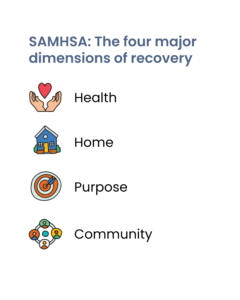
Purpose – having time and energy for fulfilling everyday activities such as a job, hobbies, education, and spending time with loved ones is a key and heartfelt component of long-term recovery. Virtual treatment saves you the time and energy spent commuting and sitting in waiting rooms so that you have more time to dedicate to these other priorities.
Community – Having thoughtful and compassionate relationships is instrumental to long-term recovery. Virtual care affords you more time to nurture these relationships and also opens the door to new, supportive communities through services such as online addiction counseling and group therapy.
*(“About Recovery,” 2024)
Online addiction treatment offers quality care, covers all of the dimensions of recovery and gives you autonomy over your schedule and day-to-day priorities.
Medication-Assisted Treatment (MAT) and Long-term Recovery
In thinking about your health, you may want to learn more about Medication-Assisted Treatment (MAT), which is an addiction treatment service that has been proven to help sustain recovery and help people stay in treatment. MAT can better survival rates and give people control over their own lives. (“Treatment Options,” 2025).
Virtual care adds privacy and convenience
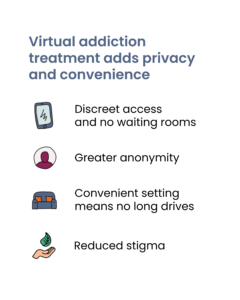
As your recovery journey continues, you may grow increasingly concerned about keeping your treatment a private matter, especially when receiving long-term care such as alcohol addiction rehab. With virtual support, you can avoid public treatment spaces and do care from the comfort of your own home because it offers:
- Discreet access: no clinic visits or waiting rooms
- Greater anonymity: less risk of being seen or recognized
- Convenient setting: no long drives or finding childcare
- Reduced stigma: seek treatment without public exposure
With virtual care, your privacy feels protected and your journey remains all your own.
Better Life Partners offers virtual long-term recovery care that fits your life
As you move further along with long-term recovery, you will want to feel secure in having time and energy for your responsibilities while also leaving room for the new opportunities that may arise as a result of continued care.
Work and new job possibilities, existing and first-time hobbies, maintaining relationships and building new ones, and potentially starting or growing a family are all beautiful aspects that may be a part of your long-term recovery journey.
Better Life Partners offers virtual addiction treatment that fits your life, making long-term recovery sustainable, less stressful, and suited to your unique and particular needs. Our large range of services include:
- Same-day, virtual treatment
- Medication-assisted treatment (MAT)
- Online prescriptions for medications, such as Suboxone
- Online group counseling and addiction counseling
- Mental health support
- Responsive care
Save time, reduce stress, get more support—all from the comfort of your own home.
Have any questions? Give us a call at (866)679-0831 or click here to get started.
References
Recovery. National Institute on Drug Abuse. https://nida.nih.gov/research-topics/recovery.
(2024, November 25). About Recovery. SAMHSA. https://www.samhsa.gov/substance-use/recovery/about.
(2025, August 25). Substance Use Disorder Treatment Options. SAMHSA. https://www.samhsa.gov/substance-use/treatment/options.