


Opioid use is on the rise. According to the National Institute on Drug Abuse, drug overdose deaths rose from 2019 to 2022 with 107,941 drug overdose deaths reported in 2022. But this tragedy has a solution: making medication-assisted treatment (MAT)–also known as medications for opioid use disorder (MOUD)–more accessible to those who need it. If you’re already sick of acronyms, raise your hand. We get it. But these letters help reduce the numbers of people suffering from opioid use disorder–people like you or a loved one. Here’s how.
March 23, 2023
What Is Medication-Assisted Treatment (MAT)? How It Works for Opioid Addiction
Medication can help treat opioid use disorder. Find out how medication assisted treatment works and why it helps. Read More

Medically reviewed by

Juliana Ekong, MD

David de Gijsel, MD, MSc, MPH
Table of Contents
What is medication-assisted treatment (MAT)?
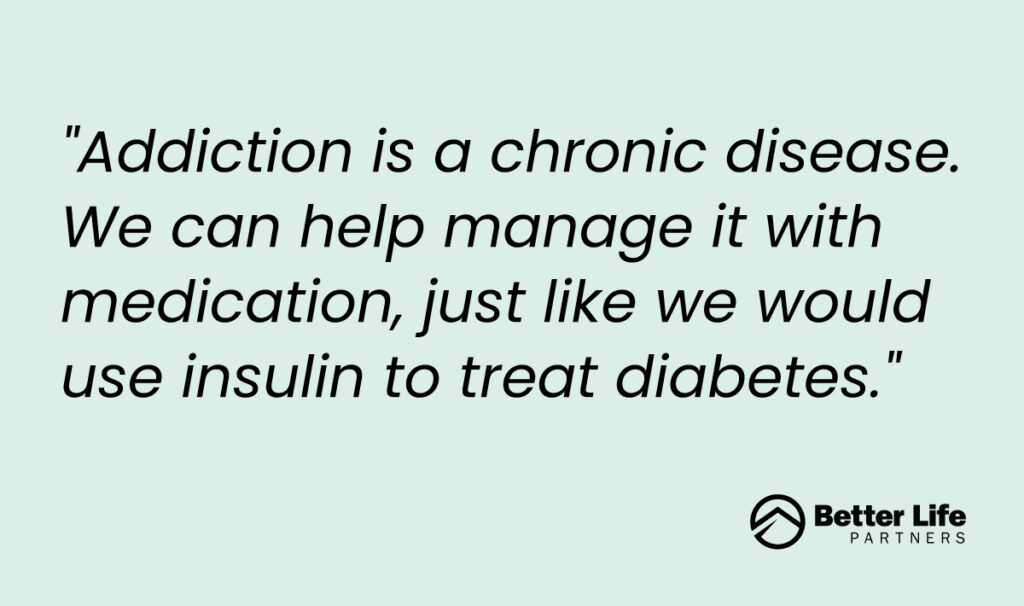
Medication-Assisted Treatment (MAT) is an evidence-based approach to treating addiction and Substance Use Disorder (SUD) that combines FDA-approved medications with counseling and behavioral therapies. MAT helps reduce cravings, manage withdrawal symptoms, and support long-term recovery by treating both the physical and emotional aspects of addiction.
How does medication-assisted treatment work?
Medication-assisted treatment works by stabilizing brain chemistry and reducing withdrawal symptoms caused by opioid dependence. Medications like Suboxone reduce cravings and help prevent overdoses, allowing people to focus on recovery and counseling.
Most MAT programs combine medication with:
-
Counseling, including group therapy
-
Recovery coaching
-
Medical monitoring
FAQ: Medication-Assisted Treatment
Does medication-assisted treatment actually work?
Yes. MAT is widely considered one of the most effective treatments for opioid use disorder because it combines medication with counseling and behavioral therapy.
Is MAT just replacing one drug with another?
No. MAT medications are carefully prescribed and monitored to stabilize brain chemistry and support recovery.
Can you start medication-assisted treatment online?
Yes. Better Life Partners offers online medication-assisted treatment that you can start from the privacy of your own home.